
Here is the contradiction most people haven't reconciled. On a May-to-September 2025 OpenRouter sample, closed models held about 80 percent of usage but 96 percent of revenue. Read one way, that looks like closed dominance. Read correctly, it is the sound of a business model coming apart.
Because that 96 percent isn't a premium customers are choosing to pay. It's a tax they haven't finished routing around yet.
Last week this column left an open thread on single-vendor consolidation versus multi-vendor routing, and whether the open-weight cost floor was strong enough to bend enterprise buying. This week the question is settled on one axis: open models have crossed the majority-volume line.
The five busiest entries on OpenRouter's live leaderboard are all open weights. The next US-lab model down the list is Anthropic's Claude. Open weights now carry more than half of the tokens routed through the platform, per The State of Open Source AI, published July 14.
That did not happen overnight, and it isn't a forecast. Open weights held a negligible slice of routed traffic in late 2024, climbed to roughly a third by year-end, and crossed 50 percent by mid-2026, per an OpenRouter study spanning 100 trillion tokens.
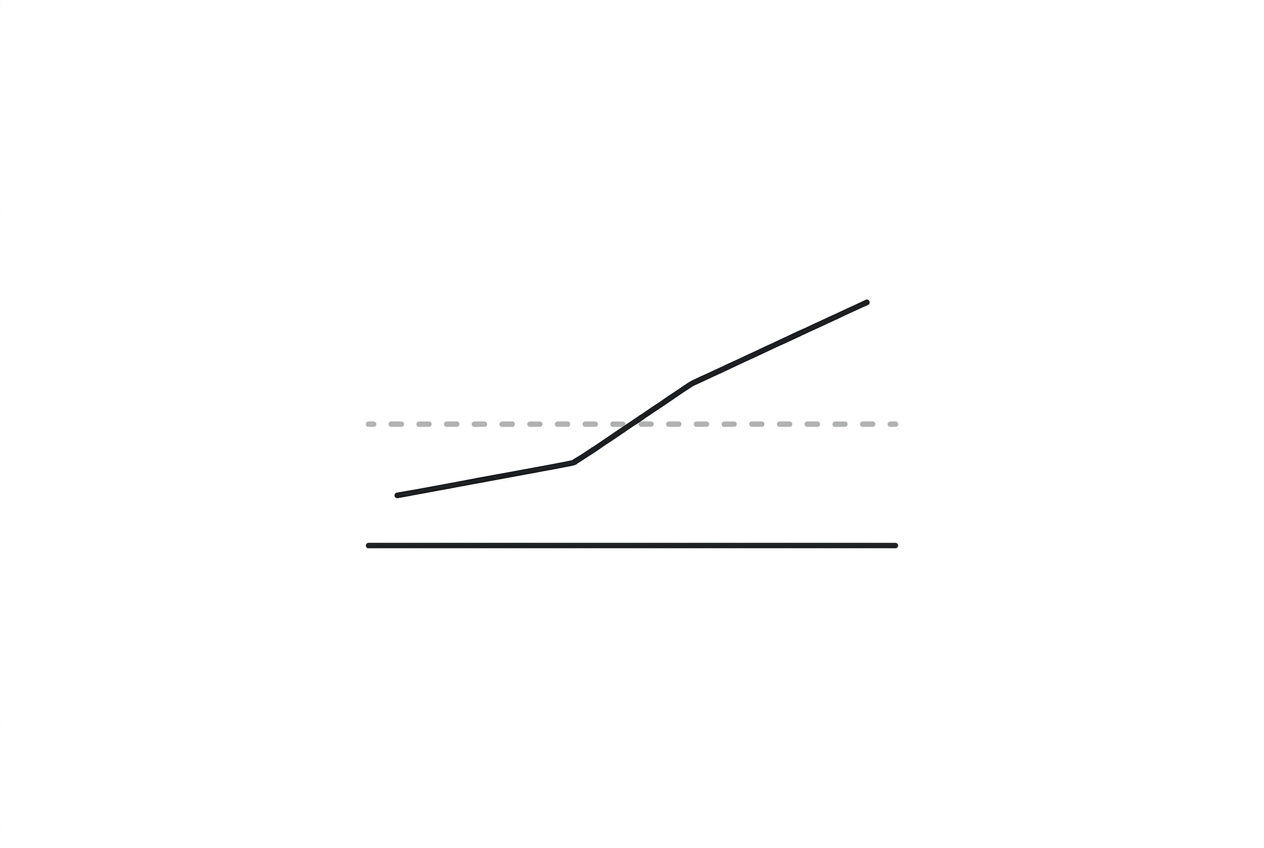
The frontier still belongs to closed systems. Production volume does not. That gap is the entire story.
Cost drives it. GPT-4-class inference fell 50-fold in 36 months, from $20 to $0.40 per million tokens. And on that same May-to-September sample, at roughly 90 percent capability parity, closed inference ran about six times more expensive per call.
Six times the price for 10 percent more capability, on workloads that mostly don't need the capability. A Linux Foundation-cited estimate puts the unrealized annual savings from switching to open weights at roughly $24.8 billion. That is the size of the tax.
Six times the price for 10 percent more capability, on workloads that mostly don't need it. That is not a premium customers choose. It is a tax they haven't finished routing around.
So the war has stopped being about who is best and started being about who gets paid.
The closed labs appear to know this. Samuel Colvin, CEO of Pydantic, reads OpenAI and Anthropic as pivoting from model quality to customer lock-in, because constantly improving quality is expensive and gets emulated fast.
The mechanism is coding services like Claude Code and Codex. Generate enough of a company's software through one provider's assistant, and the company becomes dependent on that assistant to maintain and understand its own codebase. Quality you can copy; a codebase you can't read without the tool that wrote it is stickier.
Benedict Evans frames why the pivot is necessary and why it may not be enough. In his read, OpenAI "doesn't have a unique technology or product," its enormous user base has "very narrow engagement and stickiness," and there is "no network effect or any other winner-takes-all effect so far."
Half a dozen labs ship roughly equivalent frontier models and leapfrog each other every few weeks. There is, Evans writes, "no mechanic we know of for one company to get a lead that others in the field could never match."
His conclusion is unsentimental: Altman is "trying above all to trade his paper for more durable strategic positions before the music stops." Lock-in is that trade. It is a search for a moat because the capability moat evaporated.
Here is why the trade fails.
The lock-in pivot works only if closed labs are retreating into a category open weights can't reach. The report's own capability data suggests exactly that shelter: the open-versus-closed gap widened back to 3.3 percent by March 2026 as closed reasoning models pulled ahead, and that gap concentrates in reasoning, long-context retrieval, and agentic planning. Frontier reasoning was supposed to be the keep.
Then Thinking Machines shipped Inkling.
Inkling is a 975-billion-parameter mixture-of-experts model, 41 billion active, with a 1M context window and native text, image, and audio understanding. It reasons across modalities with controllable inference effort. The weights are open, and it is fine-tunable on Tinker today.
The Register's framing was blunt: Mira Murati's lab, led by OpenAI's former CTO, is "doing what Altman won't" — releasing a frontier model that's actually open. The category the closed labs retreated into is precisely the one Inkling colonized.
And it isn't a demo. Inkling is already running inside opencode via Together AI, and available through Together's serverless inference for teams that don't want to operate multi-node infrastructure behind a model of this scale.
Sit with the timing. Long-context, multimodal, effort-controllable reasoning — the exact bundle the closed labs pointed to as the defensible remainder — shipped open, deployable, and fine-tunable in the same week open weights crossed 50 percent of routed traffic.
If the reasoning frontier itself ships open, the shrinking category the closed labs retreated into is shrinking from both ends. Volume already flipped underneath them. Now the quality argument for the premium is being contested inside its last redoubt.
Which leaves lock-in as the only remaining play, and lock-in has a problem: buyers are pre-empting it by design.
Walmart built Code Puppy, a home-grown coding assistant engineered explicitly to switch between providers and refuse dependence on any single AI company. It is not a cost-optimization tool. It is an architectural refusal.
That is the tell. Sophisticated buyers are not waiting to discover they've been locked in and then negotiating out. They are building portability in from the first commit, treating single-vendor dependence as a risk to design against rather than a convenience to accept.
The infrastructure layer is already selling to that instinct. Together AI markets provisioned throughput on MiniMax M3 with guaranteed capacity, production SLAs, token-based pricing, and "80%+ lower cost vs. closed models." Guaranteed capacity and SLAs were once reasons to stay closed; now they are features of the open stack.
So the real strategic question is clean: does market power come from a lock-in moat, or from the reasoning frontier?
If the frontier stays closed and keeps pulling ahead, closed labs have a durable premium and lock-in is gravy. If the frontier keeps going open — as Inkling just demonstrated it can — then lock-in is the whole strategy, and lock-in is a tax, not a wall.
The distinction matters because taxes get routed around and walls don't. A network effect is a wall: the more people use it, the harder it is to leave, and no competitor's money fixes that. Evans is explicit that OpenAI has no such effect.
Lock-in through a codebase or a workflow is friction, and friction has a price. Once buyers like Walmart decide that price is worth paying to stay portable, the moat inverts — it becomes the reason to leave rather than the reason to stay.
There is one genuine caveat, and the report names it. Only 51 percent of open-model deployments reach production, versus 63 percent for closed. But the report attributes that gap to tooling and operational maturity, not model quality — a problem that Together-style managed inference, and open-frontier models that run inside tools like opencode out of the box, exist specifically to close.
That is the pincer. Volume has flipped. The frontier is being contested in the open. And the operational moat that kept some teams on closed models is exactly the thing the open ecosystem is now industrializing.
Colvin is right that the next phase is a fight between sticky high-margin products and buyers demanding control. Evans is right that the music may stop. The load-bearing question is what's left standing when it does.
If the answer is a per-token premium defended by lock-in, the closed labs are holding a losing hand — because the premium is already a rounding error most tokens skip, and the customers with the most to lose are engineering the lock-in away before it can bind.
The bet closed labs are making is that frontier reasoning stays scarce and stays theirs. Inkling is the first serious evidence that it stays neither.